
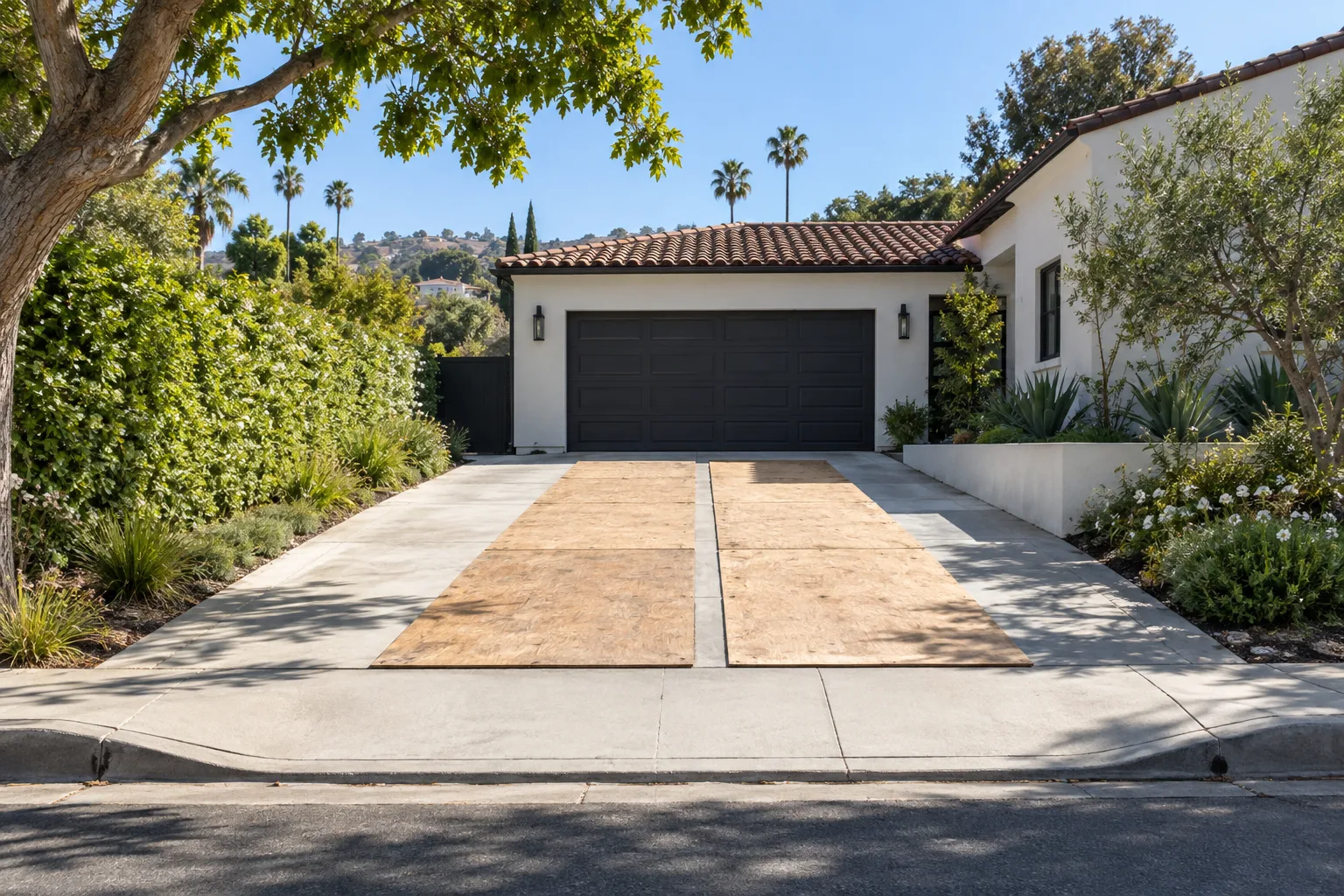
A roll-off truck needs more room than the container footprint. The driver must approach, position the rails, lower the container, and leave without striking vehicles, structures, trees, wires, or soft ground. Walk the route from the street to the intended spot before the scheduled day.
Delivery-day access checklist
| Area | Check |
|---|---|
| Street approach | Remove vehicles and confirm the truck can line up without blocked access. |
| Driveway width | Measure the narrowest point, including gates, eaves, posts, and landscaping. |
| Overhead space | Look for wires, branches, balconies, and roof overhangs along the full path. |
| Surface | Identify cracks, pavers, soft shoulders, recent concrete, steep slopes, or buried systems. |
| Placement | Mark the front, back, and door end if direction matters for loading. |
Discuss the driveway surface
Containers and loaded trucks are heavy. Asphalt can soften in heat; pavers can shift; older concrete may already be cracked. Tell the provider about the surface and any concern before delivery. Protective boards may spread contact at the container rails, but no board can make an unsuitable surface risk-free.
Protect the loading route
Choose a walking path that avoids steps, hoses, toys, and loose landscaping. Keep children and pets away from the delivery area and the container. Do not stand behind the truck or direct it unless the driver asks for a spotter and explains where to stand.
Make placement instructions unambiguous
If you cannot be present, confirm whether unattended delivery is allowed. Provide a simple photo or sketch that shows the address, approach, and intended orientation. Do not use vague instructions such as “next to the garage” when there are multiple possible spots.
Check what is under the surface
Septic components, drainage structures, utility covers, and other buried features may not support a loaded vehicle or container. If you are unsure what lies below the chosen area, do not guess. Choose another location or get qualified site advice.
When the driveway cannot provide safe access, review whether street placement is legally available. Call (213) 699-3004 to discuss the approach and container footprint.
Safety note: this checklist is general planning information. The driver and rental provider control delivery requirements for their equipment and may reject an unsafe placement.