
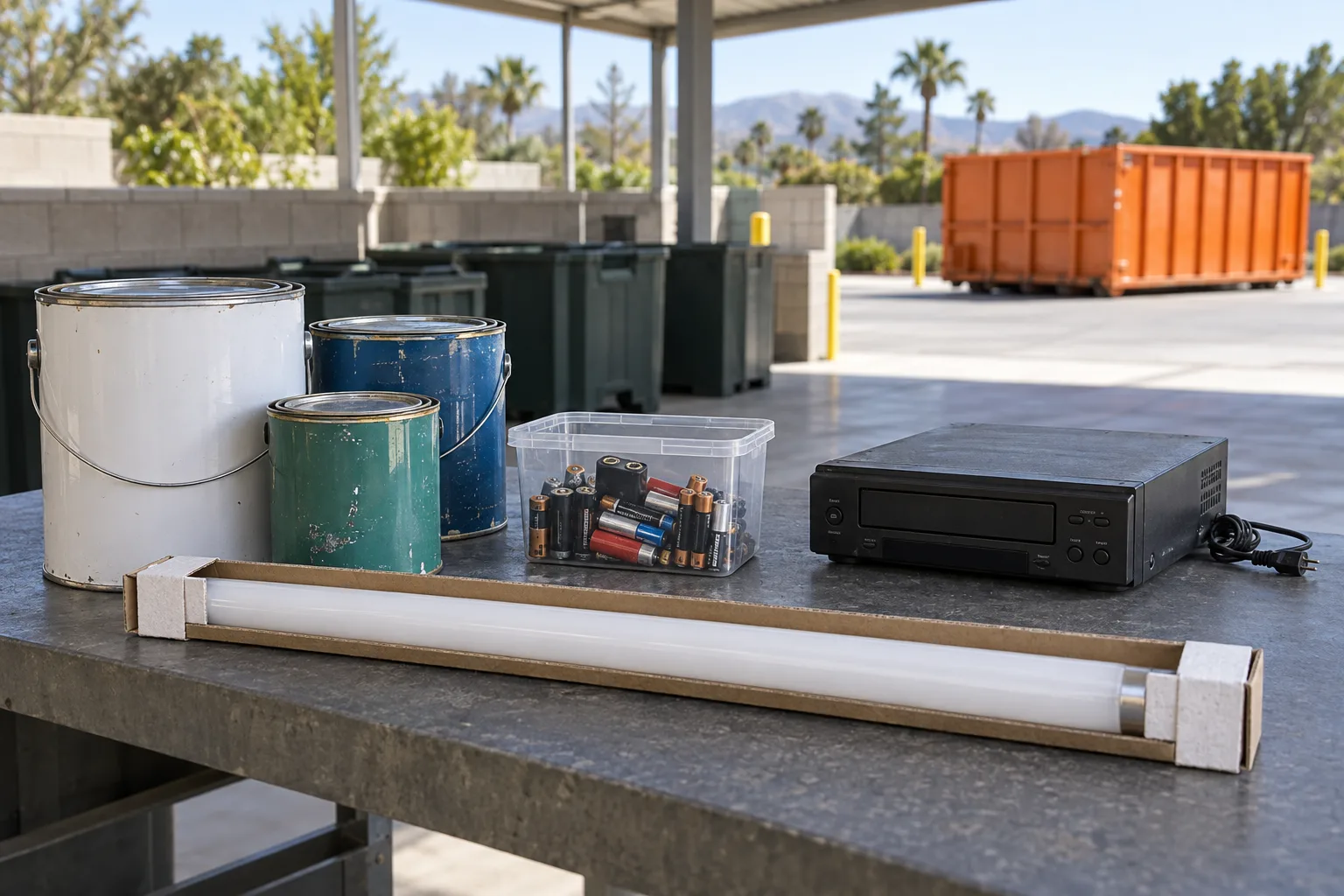
California says hazardous waste is illegal to put in garbage, down storm drains, or on the ground. Its “Waste Banned from the Trash” guidance identifies batteries, fluorescent lamps and tubes, solvent-based paint, reactive or explosive material, and other products that need special handling. Read CalRecycle’s current household hazardous-waste guidance (retrieved September 21, 2026; California).
Use a pre-load sorting table
| Item group | Action before loading |
|---|---|
| Batteries | Keep every type out of ordinary trash; use a current approved collection option. |
| Fluorescent lamps and tubes | Protect from breakage and route through an authorized program. |
| Paint, solvents, fuels, pesticides, chemicals | Do not load. Keep containers closed and follow local hazardous-waste instructions. |
| Electronics | Ask for the applicable e-waste option; do not assume ordinary debris acceptance. |
| Propane or pressurized cylinders | Keep out and contact an authorized handler. |
| Suspected asbestos-containing material | Stop work and seek qualified assessment; do not disturb or load it based on appearance. |
| Hot ash or burning material | Never place it in a container. |
Construction debris needs screening too
CalRecycle notes that universal wastes common in construction, including fluorescent lamps, mercury-containing switches and thermostats, and batteries, are generally not allowed in solid-waste landfills. Its construction and demolition guidance also says acceptance varies and facilities should be contacted before material is taken. See CalRecycle’s construction and demolition debris page (retrieved September 21, 2026; California).
Do not identify hazardous material by sight
Older flooring, insulation, roofing, coatings, and demolition components can require professional testing or regulated handling. A photo, product color, or building age is not enough to approve disposal. Pause and get qualified advice when the material is unknown.
Find the correct local option
Los Angeles operates S.A.F.E. collection centers and other programs for household hazardous and electronic waste, but locations, hours, quantity limits, and eligibility can change. Check the current LA Sanitation information before traveling. Businesses may follow different rules from households.
Questions to ask
- Is this exact product accepted in the rented container?
- Does it require separate packaging or a dedicated load?
- Is the disposal option for households, businesses, or both?
- Are there quantity or appointment limits?
- Who is authorized to transport it?
Call (213) 699-3004 before loading uncertain material. For accepted construction material, the next useful step is the pickup-ready loading guide.
Regulatory note: this article is general information. Verify current California and Los Angeles requirements for the exact material and whether it comes from a household or business.