
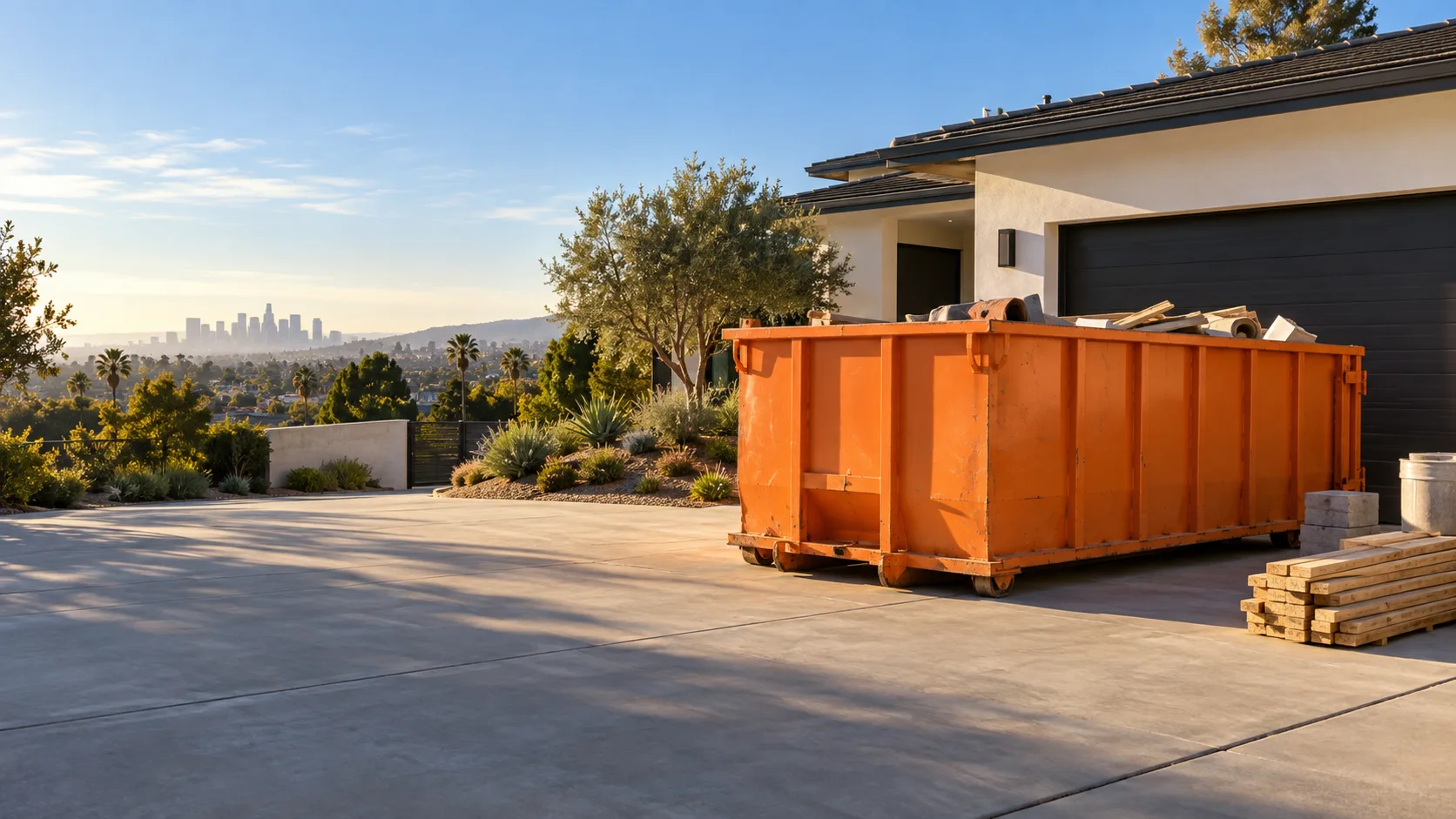
A container needs enough volume for the pile and enough weight allowance for the material. Old cabinets and cardboard take up space without the density of concrete, soil, roofing, or plaster. Tell the rental company which materials dominate the load before discussing dimensions.
Measure the material you already have
For a rectangular pile, measure approximate length, width, and average height in feet. Multiply those numbers to estimate cubic feet, then divide by 27 for cubic yards. This is only a starting estimate: loose furniture creates voids, while broken material can settle as it is loaded.
Use density as a separate decision
Heavy debris can reach a transport or disposal weight limit before the container looks full. Treat concrete, brick, soil, tile, plaster, and roofing as a separate conversation. Do not blend them into a general “remodel debris” estimate.
| Load pattern | What to report | Main sizing risk |
|---|---|---|
| Furniture and boxes | Largest items and room count | Bulky voids waste space |
| Kitchen or bath work | Cabinets, drywall, tile, fixtures | Mixed density |
| Roofing | Material type and roof area | Weight rises quickly |
| Concrete, soil, masonry | Exact material and measured amount | Weight before volume |
| Business cleanup | Furniture, shelving, inventory, packaging | Long or awkward items |
Count the material that is not visible yet
A demo project creates debris after the container arrives. Use the work plan, not only the current pile. List the surfaces or fixtures being removed and ask whether the job should be split into phases. A smaller container exchanged between phases can sometimes be easier to place than one large container, but availability and total cost must be confirmed.
Check the loading route
Container size also affects placement and how far material must travel. Measure gate openings and note parked cars, slopes, low branches, roof overhangs, and utility lines. A container that fits by volume can still be a poor choice if the delivery truck cannot safely reach the spot.
Questions to ask before choosing
- What are the exterior dimensions of the available container?
- What is the stated fill line?
- Which materials are accepted, and which require separate approval?
- What weight is included, and what happens if the load exceeds it?
- Can the chosen container carry dense material?
- How much truck clearance is required?
Call (213) 699-3004 with your measurements and material list. For the next step, use the driveway preparation checklist.
Method note: the cubic-yard conversion is standard volume arithmetic. Container dimensions, ratings, and accepted materials differ by provider and load; confirm them for the actual rental.